
Justice Reinvestment
A smarter approach to justice that strengthens communities and tackles the root causes of crime.

What is Justice Reinvesment?
Justice Reinvestment is about redirecting resources away from prisons and into communities. Instead of pouring money into systems that punish, it focuses on investing in local, community-led solutions that address the real causes of crime — like poverty, housing insecurity, mental health challenges, limited access to education, and a lack of stable employment.
At its heart, Justice Reinvestment is about giving power back to communities. It supports approaches that are culturally safe, place-based, and built on the strengths, knowledge, and leadership of Aboriginal and Torres Strait Islander people. It recognises that when communities design the solutions, the outcomes are stronger, safer, and more sustainable.
This approach is urgently needed.
Aboriginal and Torres Strait Islander people make up 8% of Townsville's population (16,043) but make up about 70% of people in prison and 90% of children in custody. On any given day 1653 Aboriginal and Torres Strait Islander people are caught up in the Justice system in Townsville. There are 753 Aboriginal and Torres Strait Islander people in custody (518 men; 135 women; and 100 children) with another 900 Aboriginal and Torres Strait Islander people on community-based orders.

Townsville Elder
“We’ve been fighting for justice for generations - it’s time for real chage.”
Community Advocate
“Our people need to be leading our justice system, not just trying to survive in it.”

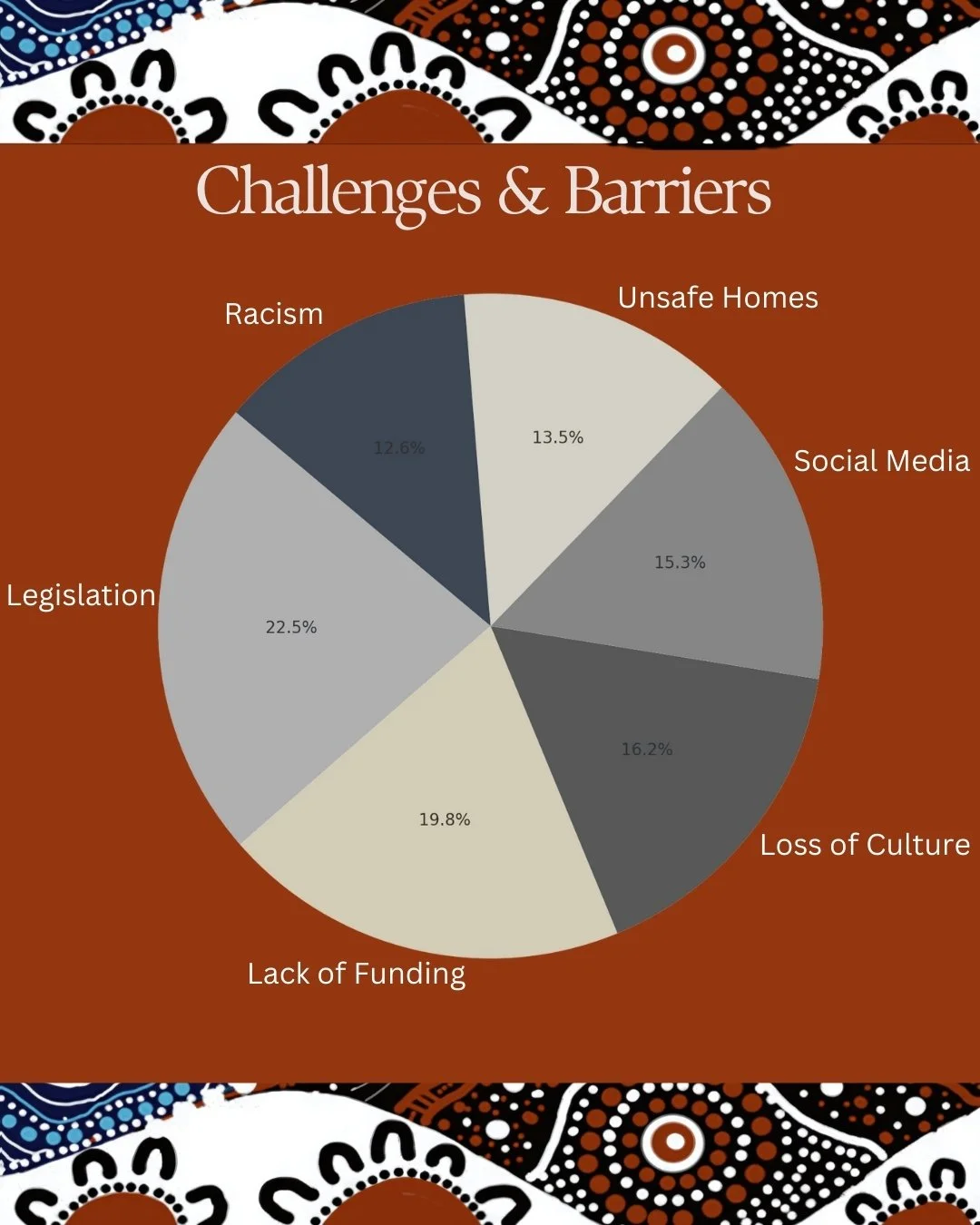
Understanding the Barriers
The chart highlights key challenges and barriers that continue to drive the cycle of reincarceration for Aboriginal and Torres Strait Islander people. These include systemic issues like racism, harmful legislation, lack of funding, and disconnection from culture, as well as social factors such as unsafe housing and the influence of social media.
These barriers don’t exist in isolation — they often intersect and compound, making it harder for individuals to access the support, safety, and opportunity needed to break free from the justice system. Recognising these challenges is an essential step toward creating solutions that are community-led, culturally grounded, and focused on long-term change.
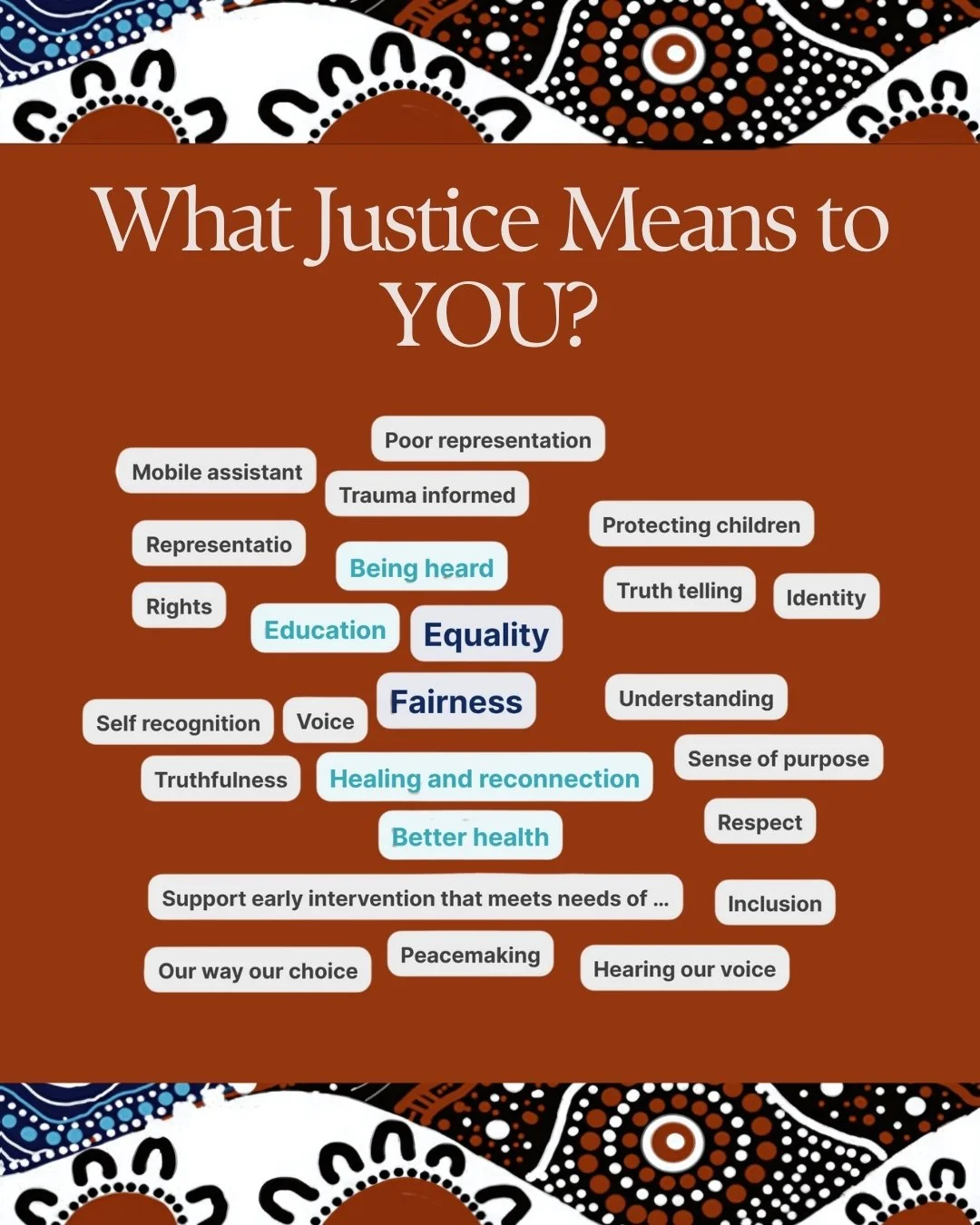
What Does Justice Look Like to You?
Justice means different things to different people. For some, it’s about feeling safe. For others, it’s about fairness, respect, or the opportunity to rebuild. In our communities, justice is not just about laws or courts — it’s about restoring balance, strengthening culture, and making sure no one is left behind.
At Justice Our Way, we listen to the voices of those most impacted by the system. We believe that real justice starts with community — with stories, lived experience, and truth-telling.
Through conversations, surveys, and community-led projects, we’re learning what justice really looks like when it’s defined by us, not done to us.
Because without community voice, there is no justice. Just silence.

We want to hear from you. Our community surveys are open to anyone who wants to share their thoughts, stories, or ideas about what justice should look like for Aboriginal and Torres Strait Islander people.
Your voice helps guide the work we do and ensures that real solutions come from community — not from the top down. Whether you’ve had direct experience with the justice system or care about building a stronger future, your perspective matters.
Take the survey today and be part of shaping a justice system that reflects us.